The launch of the Arctic Express shipping service has highlighted how climate change is beginning to reshape global logistics.
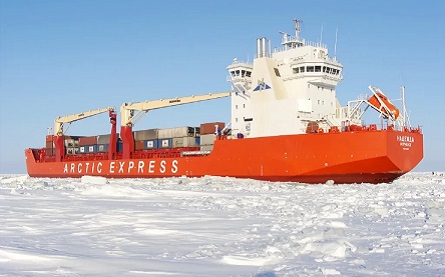 On 22 September, the container ship Istanbul Bridge departed from Ningbo-Zhoushan Port carrying nearly 4,900 containers bound for the UK. Its destination, Port of Felixstowe, was reached in just 18 days by transiting the Northeast Passage along Russia’s Arctic coast.
Traditionally, the journey between China and Europe takes around 40 days via the Suez Canal or more than 50 days around the Cape of Good Hope. The Arctic Express therefore offers a dramatically faster alternative, also outperforming China–Europe rail freight. The service links major Chinese ports including Qingdao, Shanghai and Ningbo with European hubs such as Rotterdam, Hamburg and Gdańsk.
However, this new route is only possible because Arctic sea ice is retreating at unprecedented speed. Scientific research shows the Arctic is warming around four times faster than the global average, opening waters that were once inaccessible for most of the year.
For Beijing, the Arctic Express aligns with its 'Polar Silk Road' strategy, promoted since 2017 as part of the Belt and Road Initiative. Cooperation with Russia is central, with Moscow providing icebreaker support and hosting major Chinese investments such as the Yamal LNG project.
Supporters argue the route cuts costs, reduces inventories and could lower CO₂ emissions by up to 50 percent. Yet environmental groups strongly disagree. Organisations such as the Clean Arctic Alliance warn of pollution, black carbon emissions and the severe risks of oil spills in one of the world’s most fragile ecosystems.
With fewer than 100 Arctic transits recorded in 2024, the route remains niche. Even so, the Arctic Express underscores a growing paradox: faster global trade enabled by the very climate disruption it may further intensify.
Photo: The Arctic Express service.